CLICK HERE TO PRINT
Chelsea Jewish Lifecare — Celebrating Life Through The Jewish Tradition — A Legacy Lifecare Affiliate

Welcome to Our Fall Newsletter!

​The Kaleidoscope Program at Chelsea Jewish Lifecare

Finding Moments That Shine

Ann’s daughter had a feeling her mother, a memory care resident at Jeffrey & Susan Brudnick Center for Living, would not engage in group activities.

“She probably won’t want to participate,” Tracy told the staff. “But please try.” So they did.

The staff started slowly, meeting Ann where she was and giving her time to feel comfortable. She formed trusting relationships with Coney, a CNA; Stella, an RN; and other members of the Clarendon staff. Little by little, Ann began saying yes.

She agreed to have her nails painted. She quietly held her rosary beads and joined the group in prayer. With the help of Coney and her daughter, she enjoyed a luxurious bath in the soaker tub. Later, she sang along with live entertainment and helped plant flowers in her patio garden.

None of these moments may seem extraordinary on their own. But for someone experiencing memory loss, they can represent something profound: connection, choice, dignity and the opportunity to remain an active participant in life.

That is the essence of the Kaleidoscope program. Chelsea Jewish Lifecare’s approach to caring for residents experiencing memory loss across its assisted living and nursing homes.

Focus Is on the Person, Not the Diagnosis

For Susan LeClaire, PAC Certified Dementia Trainer and Director of Memory Care for Chelsea Jewish Lifecare, the residents are the staff’s number one priority. “Our focus is on the person, not on the diagnosis,” explained LeClaire.

Kaleidoscope is built around seven elements of best practices in dementia care: person-centered living; organizational commitment to excellence; care coordination; advanced staff training and competency; family education and support; a safe and supportive environment; and engaging experiences.

Together, these elements share a simple but powerful goal: helping residents live with dignity, security and as much independence as possible while continuing to experience meaningful moments each day.

Meeting People Where They Are

Memory loss can affect much more than memory. Residents may have difficulty with familiar routines, finding the right words, understanding language or knowing where and when they are. These changes can bring frustration, fear, loneliness and social isolation.

Kaleidoscope recognizes that the answer is not simply to do things for residents. Instead, specially trained staff learn how to support residents in doing as much as they can for themselves.

Through individualized routines, cueing and specialized communication techniques, caregivers build relationships and create a sense of predictability and trust.

Staff are also trained to use Teepa Snow’s Positive Approach to Care, which emphasizes making a connection before attempting a task. A respectful greeting, eye-level contact, supportive positioning and permission-based touch can transform an interaction.

The Music We Remember

Some of the most powerful connections come through music.

LeClaire explained that musical memories often remain accessible longer than many other types of memory. A resident who rarely speaks may still sing when a familiar song begins. Music can unlock memories and emotions—even when the words of everyday conversation have become difficult to find.

Animal therapy can have a similar effect, providing sensory, emotional and social stimulation without requiring residents to communicate verbally.

And the most meaningful experiences are not always planned activities. They may happen spontaneously: a song, a garden, a conversation, a shared smile, a favorite meal or a walk outdoors.

Small Victories, Big Meaning

Harold, for example, walks 50 laps around the patio every day, rain or shine. He tends the garden, feeds the birds and gathers flowers and colorful leaves to brighten the spaces of his housemates. In winter, he bundles up to build a snowman.

He also finds ways to give back, helping fellow residents with art projects and flower arranging and sometimes reading to them at bedtime.

Staff encouraged Nancy, another memory care resident, to feed herself at mealtimes. She was able to partially regain her ability to feed herself using her right hand. Staff also supported her as she selected flowers and carefully arranged them in a vase.

For her son, watching that progress has brought immense happiness.

“Success can be as simple—and as meaningful—as feeding yourself, planting a flower or singing a familiar song,” LeClaire stressed

Caring for the Caregivers

Creating these moments begins with staff who understand dementia and feel confident supporting those who live with it.

Kaleidoscope dementia training begins with new employee orientation and includes an eight-hour dementia education program and the Virtual Dementia Tour, which helps staff experience some of the challenges of living with dementia. Employees then shadow experienced nurses, CNAs or Shabazz mentors before working independently.

Advanced training continues, including Teepa Snow’s Positive Approach to Care Champion program. Chelsea Jewish Lifecare is also developing standardized measures based on the seven Kaleidoscope elements to evaluate practices and strengthen dementia care across its communities.

Susan noted that how proud she is seeing staff put what they have learned into practice.

“I am energized and inspired whenever I see our staff putting their Champion skills into practice with residents,” she said. “The self-esteem and confidence they gain from these experiences speak volumes.”

Seeing What Is Still Possible

Kaleidoscope requires families and caregivers to look at memory loss through a different lens.

Like a kaleidoscope, which transforms individual pieces into something beautiful, the program recognizes that every resident is more than a diagnosis. Each person is made up of a lifetime of experiences, relationships, preferences and memories—and even as some memories fade, much remains.

For Ann, Harold and Nancy, there are many small moments like songs to sing, flowers to plant, gardens to tend and hands to hold. But sometimes, especially in memory care, small moments are where life shines the brightest.
Sephardic Foundation on Aging Awards a $25,000 Grant to Jeffrey & Susan Brudnick Center for Living

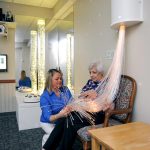
Earlier this summer, the New York-based Sephardic Foundation on Aging (SFOA) awarded a $25,000 grant to the Jeffrey & Susan Brudnick Center for Living (BCL) to create a Sensory Room for our residents in BCL’s Dementia Special Care Unit (DSCU).

Unlike a standard memory care unit, our DSCUs, under the supervision of Susan LeClaire, serve a population with advanced cognitive decline and complex care needs, providing round-the-clock supervision and significant assistance with nearly all daily activities, including dressing, bathing, and meals.

These residents exhibit challenging behaviors due to the progressive deterioration of brain cells that causes dementia and often become frustrated while trying to communicate to their caregivers what they need and what problems they are experiencing, which can often lead to agitated behaviors.

A sensory room is a specially designed non-judgmental environment that features a variety of assistive equipment and therapeutic tools that have proven to be highly effective in reducing anxiety and agitation in people with dementia. This intervention serves to mitigate the risks and impact on the individual (and potentially other residents and staff) that may result from negative emotions and behaviors. Sensory stimulation is defined as anything that affects one of our five senses — sight, hearing, smell, taste, and touch – and a sensory room addresses these key elements. A resident in distress will experience the room’s soft lighting, pleasing imagery, soothing music, inviting scent, and its varied tactile objects. Collectively, this environment fosters a sense of peace and well-being and enables the resident to return to a calmer state.

Many of the therapeutic tools are designed to not only de-escalate the moment, but also encourage communication, which may aid in improving cognitive function. This initiative not only encourages individual exploration but always respects the inherent worth of each resident – a core component of CJL’s mission.

We anticipate use of the dedicated space to begin in late fall, following installation of equipment and training of DSCU staff. Thank you to the Sephardic Foundation for its support and commitment to Chelsea Jewish Lifecare!


* For over 60 years, SFOA has fostered innovation and collaboration in the field of aging so older people and their communities have the support and resources they need to flourish. In 2022, SFOA awarded the Katzman Center for Living a $75,000 grant to implement new tools and strategies for improving the quality of life for residents.

Helping New Residents Feel at Home at Kaplan Estates

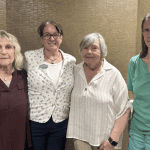
[From left: Diane Hart, Krista Burke, Roberta Mendelsohn and Dianne Cahill]

At Kaplan Estates, Roberta Mendelsohn helps new residents feel at home

When Roberta Mendelsohn moved into Harriett & Ralph Kaplan Estates Assisted Living a few years ago, she quickly discovered that one of her favorite things was helping new residents feel at home.

Today, Mendelsohn, 85, serves as the community’s “resident ambassador,” a role that suits her outgoing personality and caring nature.

“I immediately introduce myself to new residents,” Mendelsohn said. “I understand the first few weeks can be overwhelming when you’re living in an unfamiliar place, so I want to make people feel at home. Plus, it’s a great way to make new friends!”

Originally from Chelsea, Mendelsohn spent much of her life involved with Temple Sinai Marblehead, where her son-in-law is the cantor. She enjoys her big, blended family and being a grand-mother of 10. Mendelsohn chose assisted living because she wanted to maintain her independence while staying active and connected to others. Her kids and grandkids visit often, frequently hosting parties in the assisted living’s event spaces.

She also recognized an opportunity to help people who, like her, were beginning a new chapter in their lives.

Read the full article in the Jewish Journal.

Message from Megin Hemmerling, Regional President

Dear Residents and Families,

As we embrace the fall season, it seems like the perfect time to pause and prepare for the months ahead. The earlier sundowns are a reminder that soon we will be setting the clocks back. This year it will be November 1.

We extend our warmest wishes to all those who celebrate the Jewish holidays. May this year be filled with reflection, celebration, and meaningful time with family and friends.

It is also a good time to review your health care decision-making and legal documents to make sure they are current and continue to reflect your wishes.

New assisted living regulations are now in effect through the Executive Office of Aging and Independence. Please look for ongoing communications from your Executive Director as we share updates and information.

And finally, our fall and winter menus will be coming soon. We look forward to sharing the seasonal selections our culinary teams have prepared. Our menus prove that eating healthy can also be delicious!

Wishing you a happy, healthy, and enjoyable fall.

All the best,

Megin

Forbes Features Leonard Florence Center for Living

Nursing Homes Can Provide Quality, Creative Care. Here’s One

By Howard Gleckman
[Photo by Stan Grossfeld of Patrick O’Brien]

The nursing home business is tough. Few want to live in them. It is hard to make money running a good one. Government regulations make creative care a huge challenge. And they have a reputation, too often deserved, of being unpleasant and even dangerous places to live and work.

Yet, I sometimes come across a skilled nursing facility that trashes all the stereotypes. It shows what a nursing home can become with a committed and skilled staff, good organization, and passionate and creative leadership.

I recently visited one such place, the Leonard Florence Center for Living in the blue-collar Boston suburb of Chelsea. It struggles with insufficient Medicaid reimbursement, but the care and dignity it provides its residents are extraordinary. It has created a sense of personal autonomy among staff and residents that makes it possible for extremely ill people to live their best possible lives.

Click here to continue reading on Forbes.com

Click here to continue reading via PDF.

Fall Craft Fair

October 4, 2026 at 10:00 am

Join us on Sunday, October 4 for our 3rd Annual Fall Craft Fair!

The craft fair will take place at Brudnick Center for Living on our Peabody Campus from 10am-3pm.

  • Free entry
  • Refreshments
  • Arts & crafts
  • Kid friendly
  • Over 40 raffles
  • And more!

For more information please contact Sally Little at 978-471-5147 or email at slittle@chelseajewish.org.

Click here to view/download the event flyer.

Your Voice Matters!

We want to hear from you! Our annual Resident Satisfaction Survey is an important opportunity for residents and families to share their experiences, celebrate what we’re doing well, and let us know where we can improve.

Once again, we’ve partnered with Activated Insights to conduct the survey.

The survey will take place October 12 through October 25. Residents and families will receive a personalized invitation by email or text with a unique survey link. The survey takes approximately 10 minutes and can be completed on a smartphone, tablet, or computer. All responses are confidential.

Need assistance? Our Executive Directors, also known as our “Survey Champions,” will be available to answer questions, and offer assistance with accessing or completing the survey.

“Your feedback helps us understand what matters most to our residents and families,” said Melissa Kershaw, MPT, Director of Organizational Development at Chelsea Jewish Lifecare. “Every voice gives us an opportunity to learn, grow, and make our communities even better.”

Thank you for participating in the survey. We truly appreciate your help!

Support Our Community

Give with Purpose

Your generosity directly supports programs, care, and experiences that matter most to our residents.

Donate Today
Chelsea Jewish Lifecare